
"north neighbor"
600 article(s) found

Tanzanian coffee bean varieties, taste of Tanzanian coffee
Pay attention to coffee comment (Weixin Official Accounts vdailycom ) and find a beautiful cafe to open its own shop Tanzanian beans Source: In 1898, bourbon coffee was introduced to Kilimanjaro region of Tanzania by Catholic priests. The Kent species was introduced in 1920. So far, coffee in Tanzania has been dominated by bourbon and Kent. Coffee

Introduction to grinding scale of taste treatment method for flavor description of coffee manor in Honduras
For coffee production in Honduras, the geographical conditions of Honduras are no less than those of neighboring coffee-producing countries such as Guatemala and Nicaragua. There are 280000 hectares of coffee plantations in Honduras, mainly small coffee plantations, most of which are less than 3.5ha. These coffee plantations account for the whole flood.

A Brief Introduction to the Treatment Method of Grinding Degree and Roasting Degree of Tanzania Fine Coffee Beans with Strong Aroma
The important producing area is in the mountainous area close to Kenya in the north. Coffee farmers grow coffee 85%. Local coffee farmers grow coffee between 1300-2000m above sea level. Its coffee flavor is different from that of neighboring Ethiopia and Kenya. He has the characteristics of both countries. The body thickness is good and the aroma of fruit and flowers is worth a try. Coffee belongs to dicotyledonous plants, generally a coffee cherry

Description of planting flavor in coffee bean producing area of Tanzania
Following Cafe (official Wechat account vdailycom) found that Beautiful Cafe opened a small shop of its own Tanzania beans Source: Bourbon coffee was introduced to the Kilimanjaro region of Tanzania by Catholic priests in 1898. Then the Kent species was introduced in 1920. Therefore, up to now, the coffee in Tanzania is mainly bourbon and Kent. Coffee products

A brief introduction to the market price of Columbia's exquisite boutique coffee beans
The annual temperature there is about 18 degrees Celsius, the annual rainfall is 2000 to 3000 mm, latitude 1-11 15 north, longitude 72-78 west, the specific range can exceed 2.000 meters above sea level. By a special combination of factors, the latitude, altitude, soil, plant origin of species and varieties of coffee in the coffee growing areas of Colombia, the climate and tropics of the coffee growing areas

High-balanced Columbia exquisite boutique coffee bean cultivation geographical location, climate, altitude is simple.
The annual temperature there is about 18 degrees Celsius, the annual rainfall is 2000 to 3000 mm, latitude 1-11 15 north, longitude 72-78 west, the specific range can exceed 2.000 meters above sea level. By a special combination of factors, the latitude, altitude, soil, plant origin of species and varieties of coffee in the coffee growing areas of Colombia, the climate and tropics of the coffee growing areas

A brief introduction to the Market Price of Columbia's exquisite Fine Coffee Bean varieties
The annual temperature there is about 18 degrees Celsius, the annual rainfall is 2000 to 3000 mm, latitude 1-11 15 north, longitude 72-78 west, the specific range can exceed 2.000 meters above sea level. By a special combination of factors, the latitude, altitude, soil, plant origin of species and varieties of coffee in the coffee growing areas of Colombia, the climate and tropics of the coffee growing areas

A brief introduction to the market price of Columbia's exquisite boutique coffee bean varieties
The annual rainfall is 2000 to 3000 mm, latitude 1-11 15 north and longitude 72-78 west. The specific range of elevation is more than 2.000 meters. By a special combination of various factors, the latitude, altitude, soil, plant origin of species and varieties of coffee in the coffee growing area of Colombia, the rain pattern produced by the climate and tropical convergence of the coffee growing area, in one.

A brief introduction to the Origin, Development, History and Culture of Columbia's exquisite Coffee beans
The suitable climate in Colombia provides a real natural pasture for coffee. Coffee trees in Colombia are mainly cultivated in the Andes, on steep slopes about 1300 meters above sea level, where the annual temperature is about 18 degrees Celsius, annual rainfall is 2000 to 3000 millimeters, latitude 1-11 15 north, longitude 72-78 west, and the specific range of elevation can exceed 2.000 meters. By
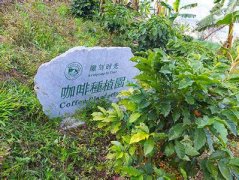
A brief introduction to the origin, development, history and culture of Columbia's exquisite boutique coffee beans.
The suitable climate in Colombia provides a real natural pasture for coffee. Coffee trees in Colombia are mainly cultivated in the Andes, on steep slopes about 1300 meters above sea level, where the annual temperature is about 18 degrees Celsius, annual rainfall is 2000 to 3000 millimeters, latitude 1-11 15 north, longitude 72-78 west, and the specific range of elevation can exceed 2.000 meters. By

A brief introduction to the origin, development, history and culture of Columbia's exquisite boutique coffee beans.
The suitable climate in Colombia provides a real natural pasture for coffee. Coffee trees in Colombia are mainly cultivated in the Andes, on steep slopes about 1300 meters above sea level, where the annual temperature is about 18 degrees Celsius, annual rainfall is 2000 to 3000 millimeters, latitude 1-11 15 north, longitude 72-78 west, and the specific range of elevation can exceed 2.000 meters. By

Introduction to the characteristics of Ethiopian Bancimagi Coffee Flavor Manor
In February 1977, Lieutenant Colonel Mengistu Haier Maryam (MENGISTU HAILE MARIAM) launched a military coup and served as Chairman of the interim military Administrative Council and head of State. In 1979, the Ethiopian Labor people's Party Organization Committee, dominated by soldiers, was established to implement an one-party system. In 1984, the Ethiopian Workers' Party was formed according to the Soviet Communist Party model. Mengistu, September 1987

A brief introduction to the description of the flavor and aroma characteristics of Columbia's exquisite coffee beans
The annual rainfall is 2000 to 3000 mm, latitude 1-11 15 north and longitude 72-78 west. The specific range of elevation is more than 2.000 meters. By a special combination of various factors, the latitude, altitude, soil, plant origin of species and varieties of coffee in the coffee growing area of Colombia, the rain pattern produced by the climate and tropical convergence of the coffee growing area, in one.

Rwanda Red bourbon _ three different Red bourbon Coffee characteristics
Rwanda Rwanda from Central Africa, Uganda to the north, Tanzania to the east, Burundi to the south and Congo to the west, is a standard landlocked country. The neighboring countries are all big coffee producers. For many years, Rwanda coffee beans have been exported through the ports of Uganda to Kenya. Rwanda Rwanda beans are characterized by smoothness, acidity and floral fragrance similar to those of Yegashev and Kenya AA.

A brief introduction to the treatment method of grinding degree and baking degree of Columbia exquisite coffee beans with high balance
Colombia's exquisite Tamina boutique raw beans Colombia's suitable climate provides a real natural pasture for coffee. Coffee trees in Colombia are mainly cultivated in the Andes, on steep slopes about 1300 meters above sea level, where the annual temperature is about 18 degrees Celsius, annual rainfall is 2000 to 3000 mm, latitude 1-11-15 north, longitude 72-78 west, sea
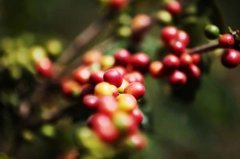
The origin story of Kenyan coffee, whether Kenyan hand-made coffee tastes good, flavor evaluation.
The Republic of Kenya (The Republic of Kenya) is located in eastern Africa, the equator runs through the central part, and the Great Rift Valley of East Africa runs through the north and south. It is bordered by Somalia to the east, Tanzania to the south, Uganda to the west, Ethiopia and South Sudan to the north, and the Indian Ocean to the southeast. The coastline is 536 km long. 18% of the land area is arable land, and the rest is mainly suitable for animal husbandry. As coffee.
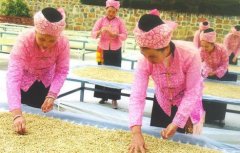
Esseyega Ficcher kochere washed G1 boutique coffee beans planting market price is simple
Yejaschuffe itself is a small town of about 20, 000 people, and the three neighboring producing areas, Wenago, Kochere and Gelena Abaya, are also classified as Yejasuffe because they produce coffee with almost the same flavor as Yejasuffe. Yejasuffe is similar to neighboring Sidamo in terms of culture and geography, but it seems to be more concerned about it.

Flavor characteristics of Ugandan Bucky Su Bugisu AA Uganda Coffee
Professional coffee knowledge exchange more information about coffee beans please follow the coffee workshop (Wechat official account cafe_style) Uganda is a landlocked country in eastern Africa. Just as Ethiopia is the origin of Arabica coffee, Uganda is one of the few major countries in Africa dedicated to organic coffee production. The most famous coffee producing area in Uganda is the buckyasu to the north near the Kenyan border.

A variety of spices, fruit flavours, coffee beans, flavours, taste, aroma characteristics.
Elevation: 1500- 1700m Processing method: Sunlight Variety: Typica, Heirloom Producer: Smallholder Harvest Concentrated Processing Flavor: Jackfruit, Spice, Wine Ethiopian coffee mainly has eight producing areas: Ekempti, Limu, Illubabor, Djimma, Harrar, Teppi/Bebeka, Sidamo, Yirgacheffe. Ethiopian coffee in Taiwan